-
Du verre fondu dans des réservoirs en acier (596)
-
réservoirs d'acier inoxydable (434)
-
La fusion a collé les réservoirs époxydes (592)
-
Réservoirs en acier galvanisé (321)
-
Toits en aluminium de dôme (1316)
-
Réservoirs de stockage des eaux usées (231)
-
réservoirs soudés en acier (457)
-
Récipients à pression (295)
-
Digesteur anaérobie (201)
-
Réservoirs d'eau industriels (349)
-
Réservoirs en acier recouverts de verre (180)
-
Réservoirs en acier boulonnés (390)
-
Cuve de stockage de boue (115)
-
Cuve de stockage de biogaz (173)
-
réservoirs de stockage de lixiviation (133)
-
Réservoirs de stockage d'eau pour l'agriculture (179)
-
Réservoir d'eau de feu (166)
-
Silos pour le stockage des céréales (146)
-
Projets de biogaz (425)
-
Projets de traitement des eaux résiduaires (788)
-
Un toit à double membrane (223)


|
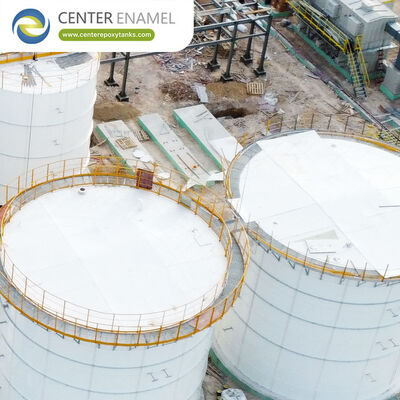
Silos de chaux FBE: la norme d'ingénierie de 2026 pour le stockage industriel de déchets secs
| Lieu d'origine: | Chine |
| Nom de marque: | CEC TANKS |
| Certification: | ISO 9001:2008, AWWA D103 , OSHA , BSCI |
| Numéro de modèle: | W201691123005 |
| Quantité de commande min: | 1SET |
| Prix: | $5000~$20000 one set |
| Détails d'emballage: | Pol poly-FOAM entre chaque deux plaques d'acier; Palette en bois et boîte en bois |
| Délai de livraison: | 0-60 jours après le dépôt reçu |
| Conditions de paiement: | LC, T/T |
| Capacité d'approvisionnement: | 60 ensembles par mois |
|
Les informations détaillées |
|||
| Lieu d'origine | Chine | Nom de marque | CEC TANKS |
|---|---|---|---|
| Certification | ISO 9001:2008, AWWA D103 , OSHA , BSCI | Numéro de modèle | W201691123005 |
| Épaisseur des plaques d'acier: | 3 mm à 12 mm, dépend de la structure du réservoir | Intégrité à la corrosion: | Excellent |
| Résistance chimique: | Excellent | Capacité: | 20 m3 à 18 000 m3 |
| Durée de vie: | ≥ 30 ans | Perméabilité: | Gaz / liquide imperméable |
| Mettre en évidence: | Stockage industriel de silos à chaux FBE,silos en vrac époxy liés par fusion,réservoirs de stockage en vrac sec 2026 |
||
Description du produit
Silos de chaux FBE: la norme d'ingénierie de 2026 pour le stockage industriel de déchets secs
Dans le traitement des eaux municipales modernes, la désulfuration industrielle des gaz de combustion (FGD) et le traitement chimique, le stockage de réactifs en poudre en vrac tels quechaux hydratéeetcalcaire rapideLa chaux est très hygroscopique (absorbant l'humidité), très abrasive lors du transfert pneumatique et très corrosive si l'humidité pénètre dans la zone de stockage.
À compter de 2026,Silos de chaux époxyde lié par fusion (FBE)En combinant la souplesse structurelle et la résistance à la traction élevée de l'acier au carbone boulonné avec unebarrière en polymère fondue en usine, les silos FBE offrent une alternative durable, résistante aux chocs et rentable au béton traditionnel ou au confinement soudé sur le terrain.
1Qu'est-ce qu'un silo à chaux FBE?
Un silo de chaux FBE est une structure de stockage modulaire à boulons utilisant des panneaux en acier au carbone haut de gamme qui sont recouverts en usine d'une résine époxy thermodurcissable de haute performance.
Contrairement aux peintures traditionnelles appliquées sur le terrain, qui sont sujettes aux trous d'épingle et à une épaisseur inégale, les peintures à l'huile d'olive sont des peintures à l'huile d'olive.Epoxy lié par fusionLes plaques d'acier sont soufflées en gravier jusqu'à obtenir une finition presque blanche, préchauffées à des températures comprises entre 180°C et 230°C,et pulvérisé électrostatiquement avec de la poudre de polymère sècheLa poudre fond, s'écoule et se croise chimiquement pour former une barrière protectrice inséparable liée en permanence au substrat d'acier.revêtement résistant conçu pour protéger l'acier de la structure contre le frottement continu et l'usure chimique.
2Performance technique: navigation des matières lourdes sèches
Le stockage de chaux en vrac nécessite une ingénierie spécialisée de la manutention des matériaux pour assurer des flux constants tout en maintenant la sécurité structurelle.La technologie FBE y parvient grâce à plusieurs mesures critiques:
Impact et résilience à la souplesse
Les silos de chaux subissent des changements de charge dynamiques importants, des vibrations des activateurs de poubelles et des cycles de pression pneumatique continus pendant le remplissage.Alors que certains revêtements vitreux peuvent être fragiles et sujettes à éclaboussures ou des fissures sous un stress physique intenseLe polymère thermodurcissable se plie le long du panneau d'acier, offrant une résistance supérieure aux chocs mécaniques.
Enveloppe anti-corrosive des bords et protection des joints
Lorsque la chaux liquide absorbe l'humidité, elle réagit exothermiquement pour former de la chaux hydratée, créant un environnement très alcalin.une corrosion électrochimique sévère peut survenir. La fabrication moderne de FBE utilise une application électrostatique "poudre sur poudre" qui permet un enveloppement complet sur les bords tranchants du panneau et à l'intérieur des trous des boulons,neutralisant les zones primaires où la rouille localisée commence généralement.
Décharge de matériau lisse et faible coefficient de frottement
Les poudres de chaux sont connues pour être sujettes à des "bridges" ou à des "rot-holing" à l'intérieur d'une trémie, provoquant des interruptions de débit.finition intérieure brillante (généralement contrôlée entre 150 et 400 microns d'épaisseur)Ce coefficient de frottement ultra-faible réduit le frottement des parois, décourage activement le pontage de poudre et favorise un débit de masse prévisible vers l'alimentateur de décharge.
Tests à 100% sur les vacances en usine
Dans les silos industriels à bulles sèches, même une discontinuité microscopique dans le revêtement peut permettre à la dégradation chimique de commencer inaperçue derrière le matériau emballé.Chaque panneau individuel est soumis à une électronique haute tensionÉpreuves de vacances (plus de 1100 V)à l'usine pour garantir une barrière sans trous d'épingle à 100% avant que le système ne soit emballé à plat pour le transport.
3. Matrice de comparaison: FBE contre béton contre silos en acier soudé
| Caractéristique technique des performances | Silos en acier boulonné FBE | Béton armé | Acier au carbone soudé (peint) |
| Résistance aux chocs et flexibilité du revêtement | Supérieur(Thermoset souple) | N/A | Très haut |
| Protection contre les trous de bords et de boulons | C' est excellent.(Enveloppe électrostatique) | N/A | Pauvre (peinture sur les bords) |
| Calendrier de la construction | Très vite(Semaines par le biais de jetons au sol) | Lente (mois de coulée et de durcissement) | Modérée (exige une soudure à champ lourd) |
| Réparabilité sur le terrain | C' est facile.(Coupe de retouche liquide) | Difficile | Difficile (requiert un broyage ou une nouvelle soudure) |
| Évolutivité modulaire | - Oui, oui.(Les panneaux peuvent être ajoutés à l'échelle) | Je ne veux pas. | Je ne veux pas. |
| Capital total du projet (CAPEX) | Le plus rentable | Modéré à élevé | Très haut |
4Normes d'ingénierie et conformité mondiale
Pour satisfaire aux spécifications internationales en matière d'approvisionnement en ingénierie et passer des écrans d'appel d'offres municipaux ou industriels stricts, les silos FBE haut de gamme (tels que ceux conçus par des leaders de l'industrie commeCentre émail / Shijiazhuang Zhengzhong Technologie) sont fabriqués selon des codes internationaux rigoureux:
1.AWWA D103-19:La norme de référence mondiale pour les systèmes de stockage en acier au carbone boulonné revêtu d'usine, vérifiant les calculs structurels par rapport à la contrainte de l'enroulement, à la compression et aux distributions de la charge en vrac sec.
2.Pour les appareils à commande numérique2016:Réglementer les normes de revêtement et d'essai de haute performance pour le confinement industriel des liquides et des vracs secs.
3.Le code ASCE 7-22 / Eurocode 3 est le suivant:Les paramètres de conception structurelle et d'ingénierie qui garantissent que le silo est conçu pour résister à une activité sismique sévère, à de fortes charges de neige et à des charges de vent extrêmes allant jusqu'à250 km/h(critique pour les installations industrielles ouvertes et exposées au vent).
4.Conformité à la norme NSF/ANSI 61S'assure que le matériau de revêtement interne est totalement non toxique et conforme pour les systèmes reliés aux circuits municipaux de traitement de l'eau potable.
5Intégration industrielle avec les systèmes d'alimentation
Les silos de chaux FBE sont conçus pour s'intégrer de manière transparente dans les processus automatisés de dosage chimique et de préparation de lisier:
●Systèmes de charge pneumatiques:Construit pour gérer les lignes de déchargement des camions à haute pression, incorporant des tuyaux spécialisés et des capteurs de poussière montés en haut pour assurer une émission zéro de particules pendant les cycles de remplissage.
●La fluidisation de la décharge aide:Les conceptions de trémie boulonnées permettent d'accueillir des plaquettes fluidifiantes, des cônes d'aération ou des activateurs mécaniques pour décomposer la chaux emballée et la guider proprement dans des convoyeurs à vis ou des alimentateurs rotatifs de la serrure d'air.
●Adjacence de la boucle de dérapage:Placé directement au-dessus ou à côté des calcinateurs actifs, car le calcinage crée un environnement de vapeur alcaline très humide.le revêtement extérieur lié à l'usine garantit que la coque structurelle ne sera pas affectée par les éclaboussures chimiques atmosphériques locales.
Optimisation du retour sur investissement des infrastructures de transport en vrac sec
Pour les ingénieurs environnementaux, les gestionnaires d'usine et les entrepreneurs en PEC axés sur la maximisation de laRetour sur investissement (ROI), leSilos de chaux FBEIl représente un atout très sûr, évolutif et économique pour 2026.Ces structures éliminent le besoin d'échafaudage ou de soudage en haute altitude., réduisant les délais d'installation jusqu'à50%En éliminant les risques de fissuration du béton et en fournissant un revêtement flexible, résistant aux chocs et résistant à l'usure mécanique, la technologie FBE assure unela gestion des produits chimiques en vrac secs sans entretien pour une durée de vie opérationnelle supérieure à30 ans.
Vous concevez actuellement un système de dosage chimique ou améliorez une boucle de stockage de masse sèche pour la chaux, les cendres volantes, ou le charbon actif,et souhaitez-vous une proposition technique détaillée comprenant des calculs de la charge utile structurelle et des données de dimensionnement pour votre volume requis?