-
Du verre fondu dans des réservoirs en acier (596)
-
réservoirs d'acier inoxydable (434)
-
La fusion a collé les réservoirs époxydes (592)
-
Réservoirs en acier galvanisé (321)
-
Toits en aluminium de dôme (1316)
-
Réservoirs de stockage des eaux usées (231)
-
réservoirs soudés en acier (457)
-
Récipients à pression (295)
-
Digesteur anaérobie (201)
-
Réservoirs d'eau industriels (349)
-
Réservoirs en acier recouverts de verre (180)
-
Réservoirs en acier boulonnés (390)
-
Cuve de stockage de boue (115)
-
Cuve de stockage de biogaz (173)
-
réservoirs de stockage de lixiviation (133)
-
Réservoirs de stockage d'eau pour l'agriculture (179)
-
Réservoir d'eau de feu (166)
-
Silos pour le stockage des céréales (146)
-
Projets de biogaz (425)
-
Projets de traitement des eaux résiduaires (788)
-
Un toit à double membrane (223)

|
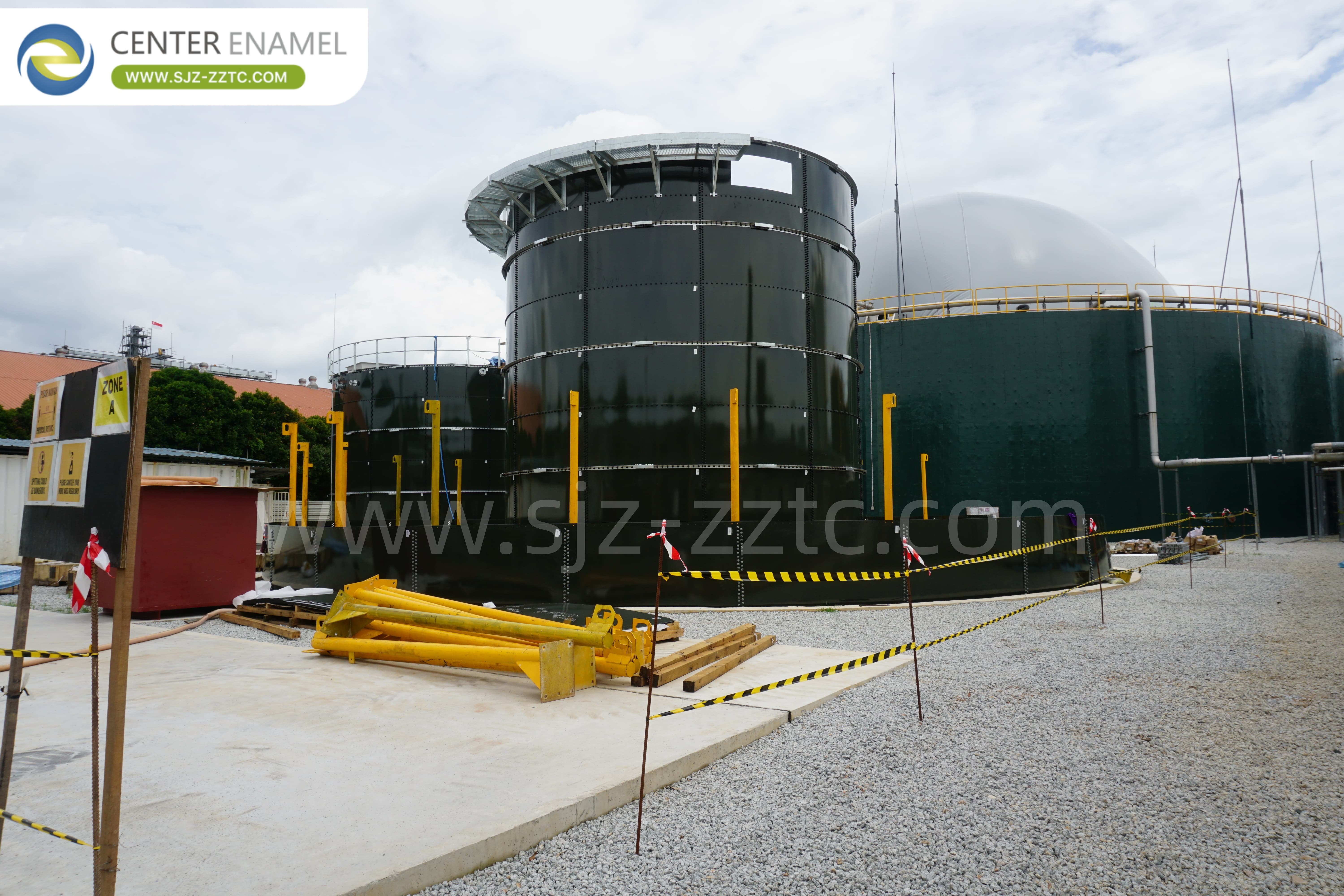
Projet de technologie de biogaz haut de gamme et de réservoirs GFS pour le biogaz des déchets ménagers en Turquie
| Lieu d'origine: | Chine |
| Nom de marque: | CEC TANKS |
| Certification: | ISO 9001:2008, AWWA D103 , OSHA , BSCI |
| Numéro de modèle: | W |
| Quantité de commande min: | 1SET |
| Prix: | $5000~$20000 one set |
| Détails d'emballage: | Poly-mousse PE entre chaque deux plaques d'acier ; palette en bois et bois |
| Délai de livraison: | 10-30 jours après le dépôt reçu |
| Conditions de paiement: | LC, T/T |
| Capacité d'approvisionnement: | 60 ensembles par mois |
|
Les informations détaillées |
|||
| Lieu d'origine | Chine | Nom de marque | CEC TANKS |
|---|---|---|---|
| Certification | ISO 9001:2008, AWWA D103 , OSHA , BSCI | Numéro de modèle | W |
| Couleur du corps du réservoir: | Vert foncé / personnalisable | Intégrité à la corrosion: | Excellent |
| Épaisseur des plaques d'acier: | 3 mm à 12 mm, dépend de la structure du réservoir | Résistance chimique: | Excellent |
| Taille du panneau: | 2,4 millions * 1,2 millions | Facile à nettoyer: | Lisse, brillant, inerte, anti-adhérent |
| Mettre en évidence: | Technologie de biogaz haut de gamme pour la Turquie,Réservoirs GFS pour les déchets ménagers,Projet de traitement des eaux usées par biogaz |
||
Description du produit
Projet de technologie de biogaz haut de gamme et de réservoirs GFS pour le biogaz des déchets ménagers en Turquie
La croissance démographique rapide, l'urbanisation accélérée et l'évolution des habitudes de consommation ont radicalement modifié la dynamique de la gestion des déchets municipaux dans les économies en développement et en transition.Parmi les divers flux de déchets solides, déchets organiques municipauxdéchets ménagers¢a introduit un goulot d'étranglement d'élimination de plus en plus difficile pour les centres urbains en expansion.Les déchets ménagers représentent une part importante des déchets quotidiens générés dans les secteurs résidentiels densesSi elle n'est pas traitée, cette immense quantité de matière organique constitue un lourd fardeau environnemental et financier pour les infrastructures municipales.lorsqu'ils sont systématiquement acheminés à travers des cadres de transformation des déchets en énergie, il fonctionne comme un substrat exceptionnel pour la production d'énergie verte durable.
Les déchets ménagers et leur composition
Les déchets ménagers proviennent directement d'activités domestiques quotidiennes dans les zones résidentielles urbaines et rurales.qui produit des volumes élevés de déchets organiques de cuisineEn outre, l'entretien résidentiel introduit des déchets de jardin, des coupes de jardin, des déchets d'élevage, des déchets de déchets d'élevage, des déchets de déchets d'élevage, des déchets d'élevage, des déchets d'élevage, des déchets d'élevage, des déchets d'élevage, des déchets d'élevage, des déchets d'élevage, des déchets d'élevage, des déchets d'élevage, des déchets d'élevage, etc.et divers types de papier et de matériaux d'emballage biodégradables dans le flux de déchetsParce que ces composants sont intrinsèquement liés à la survie humaine quotidienne et aux routines domestiques,leur production est continue et directement proportionnelle à la densité de population et à l'activité économique d'une commune.
Les défis urgents de la gestion des déchets ménagers en Turquie
Dans les pays transcontinentaux en voie d'industrialisation rapide comme la Turquie, le volume accéléré de déchets municipaux solides a largement dépassé les infrastructures de collecte et d'élimination existantes.La Turquie produit des dizaines de millions de tonnes de déchets domestiques chaque année, caractérisée par un pourcentage exceptionnellement élevé de matière organique humide ayant un profil d'humidité important.
Actuellement, une grande partie de ces déchets ménagers est dirigée vers des décharges ou des décharges non conçues situées à la périphérie des grandes régions métropolitaines et des provinces rurales.Sous le climat varié de la TurquieLes déchets organiques non gérés subissent une décomposition anaérobie rapide et incontrôlée dans ces espaces.un gaz à effet de serre dont le potentiel de réchauffement climatique est bien supérieur à celui du dioxyde de carbone ($CO_2$)En outre, pendant les fortes pluies saisonnières, ces décharges ouvertes produisent du lixiviat toxique très concentré.Ce lixiviat imprègne les sols locaux et constitue une menace directe pour les réseaux vitaux d'eau souterraine et les terres agricoles., tout en générant une pollution odorante grave et en attirant des vecteurs de maladies près des communautés locales.
La voie de la digestion: comment les déchets ménagers sont transformés en biogaz
La conversion de déchets ménagers complexes et hétérogènes en une source d'énergie stable et propre repose sur destechnologie du biogazdans un environnement anaérobie entièrement dépourvu d'oxygène,les communautés microbiennes spécialisées décomposent systématiquement la matière organique à travers quatre phases biologiques consécutives:
Hydrolyse:Les polymères organiques à poids moléculaire élevé (tels que les hydrates de carbone, les protéines et les lipides présents dans les déchets de cuisine) sont décomposés par des enzymes extracellulaires en monomères solubles tels que les sucres simples,acides aminés, et les acides gras.
Acidogénèse:Les bactéries acidifiantes fermentent rapidement ces monomères solubles et les transforment en acides gras volatils, alcools et acides lactiques.
Acétogenèse:Les micro-organismes acétogènes catabolisent les acides gras acides et les alcools accumulés, les synthétisant en acide acétique, dioxyde de carbone ($ CO_2$) et gaz hydrogène ($ H_2$).
Méthanogénèse:Dans la phase finale, les archées méthanogènes très sensibles consomment l'acide acétique et l'hydrogène pour produire du biogaz, un combustible renouvelable composé principalement de méthane ($CH_4$) et de dioxyde de carbone ($CO_2$).
Une fois capté, ce biogaz peut être converti en électricité verte, utilisé pour le chauffage industriel ou transformé en biométhane comprimé (Bio-CNG).
Les avantages stratégiques des projets de biogaz pour la Turquie
Déploiement localprojets de production de biogaz à partir de déchets ménagersoffre des avantages écologiques et socioéconomiques à plusieurs niveaux qui s'alignent sur les objectifs de la Turquie en matière de développement durable et de résilience environnementale:
Énergie renouvelable décentralisée:La conversion des déchets organiques urbains en électricité ou en biométhane fournit aux communautés locales une source d'énergie fiable, renforçant la stabilité du réseau et réduisant la dépendance aux combustibles fossiles.
L'atténuation des changements climatiques:La capture du méthane à la source empêche les émissions fugitives nocives de s'échapper dans l'atmosphère, ce qui favorise directement les objectifs nationaux de réduction des émissions de carbone et les engagements climatiques.
Détournement des décharges:Le traitement de la fraction organique par digestion anaérobie réduit le volume physique des déchets destinés aux décharges municipales sous pression,prolonger leur durée de vie et réduire les coûts d'exploitation municipaux.
Production d'engrais organiques:Le digestate riche en nutriments qui reste après le processus de digestion peut être transformé en engrais organique de qualité supérieure,en faveur du secteur agricole vital de la Turquie par une alternative rentable aux importations de produits chimiques.
Technologie de base de processus anaérobies: CSTR, UASB, USR et IC
Le choix de la configuration appropriée du réacteur est essentiel pour gérer les caractéristiques variables des flux de déchets organiques municipaux.Centre d'émail fournit une expertise spécialisée en ingénierie sur quatre processus anaérobies primaires:
CSTR (réacteur de réservoir à mélange continu):Idéal pour les substrats organiques très solides tels que les déchets ménagers triés de cuisine.prévenir la croûte de surface et maximiser le rendement du biogaz.
UASB (couverture de boue anaérobie en amont):Un procédé à haut débit conçu pour les eaux usées organiques en phase liquide. Les déchets liquides s'écoulent vers le haut à travers une couverture dense de boues anaérobies auto-granulantes.réaliser une élimination exceptionnelle de la demande d'oxygène chimique (COD) dans une empreinte très compacte.
USR (réacteur à solides en amont):Spécialement conçus pour les flux de déchets avec de fortes concentrations de solides en suspension (SS).il assure une conversion biologique complète.
Réacteur IC (circulation interne):Un système à très haut débit utilisant une boucle de circulation interne à deux étages propulsée par du biogaz auto-généré.il gère des taux de charge organique extrêmes avec une efficacité supérieure.
Les avantages des réservoirs GFS dans l'infrastructure turque de biogaz
La réussite opérationnelle à long terme de touteprojet de biogaz pour les déchets ménagersLe système de confinement de l'établissement dépend fortement de la résilience structurelle et chimique de ses systèmes de confinement.Réservoirs GFS) offrent des performances de premier ordre adaptées aux environnements municipaux:
Résistance à la corrosion supérieure:La digestion anaérobie des déchets ménagers génère un environnement chimique agressif riche en acides organiques volatils et en sulfure d'hydrogène corrosif.Le revêtement de verre inerte fusionné moléculairement aux plaques d'acier crée un bouclier imperméable qui résiste complètement à l'usure chimique..
Résistance élevée à l'environnement:La Turquie est située dans une région sismiquement active et connaît diverses conditions météorologiques.Réservoirs GFSoffre une élasticité structurelle de conception, offrant une résistance aux chocs et aux séismes supérieure à celle des structures en béton rigides et craquantes.
Construction rapide et localisée:entièrement préfabriqué hors site,Réservoirs GFSIls sont expédiés de manière modulaire et assemblés rapidement à l'aide d'un mécanisme de remontage de haut en bas, ce qui élimine les délais de coulée et de durcissement du béton sur place, réduisant ainsi au minimum les besoins en main-d'œuvre.
- Une empreinte élargie:Les configurations de réservoirs en acier boulonné optimisent le stockage vertical, minimisant l'empreinte physique requise sur le sol.Cette conception modulaire permet aux installations d'agrandir ou de reconfigurer facilement la capacité de stockage à mesure que les volumes de déchets augmentent au fil du temps.
Pourquoi s'associer avec Center Enamel pour des projets de biogaz
La collaboration avec Center Enamel en tant que partenaire EPC clé en main expérimenté garantit une excellente exécution technique et la viabilité à long terme du projet:
Livraison clé en main de bout en boutCenter Enamel gère l'ensemble du cycle de vie du projet, fournissant l'ingénierie de processus personnalisée, la fabrication de pointe, l'intégration de commandes PLC automatisées, l'assemblage rapide sur place,et mise en service.
Ingénierie des substrats sur mesure:Comme la composition des déchets varie considérablement d'une région à l'autre, notre équipe d'ingénieurs optimise la configuration interne de la digestion pour qu'elle corresponde aux caractéristiques organiques locales et aux conditions climatiques.
Intégration complète des systèmesAu-delà de l'industrie manufacturièreRéservoirs GFS, nous intégrons de manière transparente des technologies auxiliaires cruciales, notamment des détenteurs de gaz à double membrane avancés, des mélangeurs spécialisés et des systèmes de purification de biogaz en plusieurs étapes.
Une vaste expérience mondiale:Avec des installations réussies de transformation des déchets en énergie implantées dans plus de 100 pays,Le Centre d'émail adapte des innovations internationales éprouvées pour satisfaire les normes réglementaires locales et les environnements opérationnels uniques.
Études de cas de référence de projet éprouvées
L'excellence en ingénierie du Centre Enamel est démontrée dans un portefeuille diversifié d'installations internationales de biogaz à grande échelle:
Cas1: Projet de biogaz en France
Étape du processus: CSTR
Dimensions du réservoir: φ18.33 × 8.4 m (H) 1 Unité
Volume total: 2 215 m3 1 Unité
Date de réalisation: 2021
Cas2: Projet de traitement des déchets alimentaires en Turquie
Procédure: CSTR
Dimension du réservoir: φ16.81 × 16.8 m (H) 2 Unités
Volume total: 7 452 m3
Date de réalisation: 2020
Le développement d'infrastructures résilientes et durables de transformation des déchets en énergie est une étape essentielle dans le processus de développement d'une économie circulaire à faibles émissions de carbone dans les secteurs municipal et commercial.Le déploiement de solutions anaérobies spécialisées alimentées par destechnologie du biogazet primeRéservoirs GFSEn concluant un partenariat stratégique avec Center Enamel, le Centre de gestion des déchets organiques de la ville de Cologne a mis en place une stratégie de gestion des déchets organiques.les parties prenantes du projet assurent un accès direct à l'ingénierie de classe mondialeCette approche globale répond aux exigences environnementales modernes,assurer que les objectifs de développement vert à long terme sont atteints avec un succès technique et commercial exceptionnel.