-
Du verre fondu dans des réservoirs en acier (596)
-
réservoirs d'acier inoxydable (434)
-
La fusion a collé les réservoirs époxydes (592)
-
Réservoirs en acier galvanisé (321)
-
Toits en aluminium de dôme (1316)
-
Réservoirs de stockage des eaux usées (231)
-
réservoirs soudés en acier (457)
-
Récipients à pression (295)
-
Digesteur anaérobie (201)
-
Réservoirs d'eau industriels (349)
-
Réservoirs en acier recouverts de verre (180)
-
Réservoirs en acier boulonnés (390)
-
Cuve de stockage de boue (115)
-
Cuve de stockage de biogaz (173)
-
réservoirs de stockage de lixiviation (133)
-
Réservoirs de stockage d'eau pour l'agriculture (179)
-
Réservoir d'eau de feu (166)
-
Silos pour le stockage des céréales (146)
-
Projets de biogaz (425)
-
Projets de traitement des eaux résiduaires (788)
-
Un toit à double membrane (223)


|
Processus CSTR efficace et solutions anaérobies pour les projets de traitement des eaux usées pharmaceutiques au Bangladesh
| Lieu d'origine: | Chine |
| Nom de marque: | CEC TANKS |
| Certification: | ISO 9001:2008, AWWA D103 , OSHA , BSCI |
| Numéro de modèle: | W |
| Quantité de commande min: | 1SET |
| Prix: | $5000~$20000 one set |
| Détails d'emballage: | Poly-mousse PE entre chaque deux plaques d'acier ; palette en bois et bois |
| Délai de livraison: | 10-30 jours après le dépôt reçu |
| Conditions de paiement: | LC, T/T |
| Capacité d'approvisionnement: | 60 ensembles par mois |
|
Les informations détaillées |
|||
| Lieu d'origine | Chine | Nom de marque | CEC TANKS |
|---|---|---|---|
| Certification | ISO 9001:2008, AWWA D103 , OSHA , BSCI | Numéro de modèle | W |
| Couleur du corps du réservoir: | Vert foncé / peut être personnalisé | Intégrité de corrosion: | Excellent |
| Épaisseur de plaques en acier: | 3 mm à 12 mm, dépend de la structure du réservoir | Résistance chimique: | Excellent |
| Taille du panneau: | 2,4 m * 1,2 m | Facile à nettoyer: | Lisse, brillant, inerte, anti-adhésion |
| Mettre en évidence: | Traitement des eaux usées pharmaceutiques par procédé CSTR,traitement anaérobie des eaux usées Bangladesh,Projets de traitement des eaux usées pharmaceutiques |
||
Description du produit
Processus de RCST efficace et solutions anaérobies pour les agents de traitement des eaux usées pharmaceutiquestProjets dansLe Bangladesh
L'industrie pharmaceutique enLe BangladeshLa France a atteint une remarquable autosuffisance, couvrant aujourd'hui environ 98% de la demande locale de médicaments et exportant vers plus de 150 pays.Solution anaérobie,Émail du centreSpécialisé dans la fourniture de haute efficacitéProjets de traitement des eaux usées pharmaceutiques, en particulier leProcédure de CSTR, pour soutenir l'expansion durable de ce secteur vital.
Le paysage de l'industrie pharmaceutique du Bangladesh et sa politique
Le Bangladesh est une réussite unique sur le marché pharmaceutique mondial.alimenté par l'"ordonnance sur le contrôle des produits pharmaceutiques" et son statut de pays les moins avancés (PMA) au titre des accords OMC-ADPICLes principaux centres industriels tels que Gazipur et Savar abritent des usines de fabrication sophistiquées qui produisent tout, des formulations génériques aux ingrédients pharmaceutiques actifs (API).
Pour gérer l'empreinte environnementale de cette croissance, le Département de l'Environnement (DoE) au Bangladesh applique les "Règles de conservation de l'environnement." Ces réglementations imposent aux unités industrielles d' installer des installations efficaces de traitement des effluents (ETP) pour répondre à des normes spécifiques de rejetPour les entreprises pharmaceutiques, le maintien de normes environnementales élevées n'est pas seulement une exigence réglementaire, mais aussi une condition préalable à l'accès à des marchés d'exportation à forte valeur ajoutée dans l'UE et aux États-Unis.
Défis des eaux usées pharmaceutiques au Bangladesh
La fabrication de produits pharmaceutiques génère des eaux usées beaucoup plus complexes que les eaux ordinairesles eaux usées municipalesAlors que les déchets municipaux proviennent généralement d'activités domestiques telles que les cuisines et les salles de bains, les effluents industriels pharmaceutiques présentent des difficultés uniques:
Toxicité élevée: La présence d'ingrédients pharmaceutiques actifs résiduels (API), de solvants et de métaux lourds peut inhiber l'activité biologique nécessaire aux systèmes de traitement traditionnels.
Charge organique élevée: Les processus de synthèse chimique et de fermentation donnent souvent lieu à des niveaux exceptionnellement élevés de demande d'oxygène chimique (COD) et de demande d'oxygène biologique (BOD).
Caractéristiques variables: Les changements de production entre différentes gammes de produits entraînent une qualité incohérente des eaux usées, ce qui peut "choquer" et déstabiliser les réacteurs biologiques.
Flux complet de traitement des eaux usées pharmaceutiques
Center Enamel fournit un flux de traitement robuste et en plusieurs étapes conçu pour gérer ces complexités industrielles:
Pré-traitement: filtrage mécanique et réglage du pH pour stabiliser les effluents bruts.
Noyau anaérobie: La phase la plus critique, où les réacteurs commeRSEPouC.I.décomposer les matières organiques à haute résistance en biogaz.
Polissage aérobie: Traitement biologique secondaire pour éliminer les polluants organiques et les nutriments résiduels.
Filtration avancée: Utiliser des technologies à membrane ou du charbon actif pour s'assurer que l'eau respecte les normes strictes de décharge du DOE pour une libération ou une réutilisation sûres.
Technologie anaérobie de base: CSTR, IC, UASB et USR
Nous intégrons une variété de procédés anaérobies spécialisés adaptés au profil spécifique des effluents de chaque usine:
CSTR (réacteur de réservoir à mélange continu): Exceptionnellement efficace pour les eaux usées pharmaceutiques contenant beaucoup de solides en suspension (SS). Le remuement mécanique assure un contact uniforme entre les déchets et les microorganismes, offrant une grande stabilité.
Réacteur IC (circulation interne): Réacteur de nouvelle génération utilisant un procédé en deux étapes, il fait circuler les boues à l'intérieur pour gérer les charges organiques massives et résister aux chocs hydrauliques.
UASB (couverture de boue anaérobie en amont): Une solution classique et compacte qui traite les eaux usées en phase liquide en les faisant passer à travers une couverture dense de boues anaérobies.
USR (réacteur à solides en amont): spécialement conçus pour les cours d'eau à très forte teneur en solides, assurant une digestion complète des particules organiques.
L'avantage des réservoirs en verre fusionné à l'acier
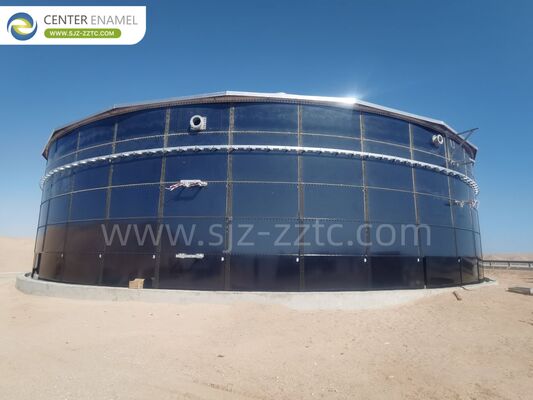
Au cœur des solutions EPC de Center Enamel se trouvent nos produits exclusifsLes réservoirs en verre fusionné en acier (GFS)Ces réservoirs offrent des avantages distincts pour l'environnement industriel bangladais:
Résistance supérieure à la corrosion: La liaison verre-acier est imperméable aux produits chimiques agressifs et aux acides organiques présents dans les déchets pharmaceutiques.
Installation modulaire rapide: La construction à boulons est nettement plus rapide que la coulée traditionnelle de béton, ce qui réduit les délais de réalisation du projet et réduit au minimum les temps d'arrêt des usines.
Résistance et durabilité aux intempéries: Conçus pour une durée de vie de plus de 30 ans, les réservoirs GFS résistent à une humidité élevée et peuvent être facilement élargis ou déplacés au fur et à mesure que les besoins de production augmentent.
Pourquoi choisir l'émail de centre comme votre entrepreneur EPC?
Choisir l'émail du centre offre une expérience transparente et clé en main pour les fabricants de produits pharmaceutiques:
Ingénierie sur mesure: Systèmes conçus avec précision et adaptés à l'empreinte chimique spécifique de l'usine pharmaceutique.
Une expertise internationale: Avec des projets dans plus de 100 pays, nous apportons des normes d'ingénierie de classe mondiale sur le marché local.
Support complet du cycle de vie: Nous gérons tout, de la conception initiale et de la fabrication des réservoirs GFS aux systèmes de contrôle automatisés et à la mise en service à long terme.
Des réussites dans le traitement médicamenteux
Le premier cas:Projet de traitement des eaux usées pharmaceutiques en Mongolie intérieure
Procédure: UASB
Dimensions du réservoir: φ13,76 × 13,2 m (H) 1 Unité
Volume total du réservoir: 1 962 m3
Date de réalisation: 2023
Deuxième cas:Projet de traitement des eaux usées pharmaceutiques de Jiangsu
Procédure: CSTR
Dimensions du réservoir:
φ10,7 × 16,8 m (H) 2 Unités
φ7,64 × 3,6 m (H) 2 Unités
φ5,35 × 3,6 m (H) ️ 4 Unités
φ3,82 × 3,6 m (H) ?? 2 Unités
Volume total du réservoir: 3748 m3
Date de réalisation: 2021
Conclusion
Alors que l'industrie pharmaceutique du Bangladesh s'oriente vers des normes environnementales plus élevées et une croissance durable, le besoin de solutions avancées pour les eaux usées est essentiel.Procédure de CSTRetVêtements fondus en acierLa technologie fournit aux fabricants une base sûre pour la conformité environnementale.Les sociétés pharmaceutiques bangladaises peuvent protéger efficacement les ressources en eau locales tout en assurant leur compétitivité économique à long terme sur le marché mondial.