-
Du verre fondu dans des réservoirs en acier (596)
-
réservoirs d'acier inoxydable (434)
-
La fusion a collé les réservoirs époxydes (592)
-
Réservoirs en acier galvanisé (321)
-
Toits en aluminium de dôme (1316)
-
Réservoirs de stockage des eaux usées (231)
-
réservoirs soudés en acier (457)
-
Récipients à pression (295)
-
Digesteur anaérobie (201)
-
Réservoirs d'eau industriels (349)
-
Réservoirs en acier recouverts de verre (180)
-
Réservoirs en acier boulonnés (390)
-
Cuve de stockage de boue (115)
-
Cuve de stockage de biogaz (173)
-
réservoirs de stockage de lixiviation (133)
-
Réservoirs de stockage d'eau pour l'agriculture (179)
-
Réservoir d'eau de feu (166)
-
Silos pour le stockage des céréales (146)
-
Projets de biogaz (425)
-
Projets de traitement des eaux résiduaires (788)
-
Un toit à double membrane (223)

|
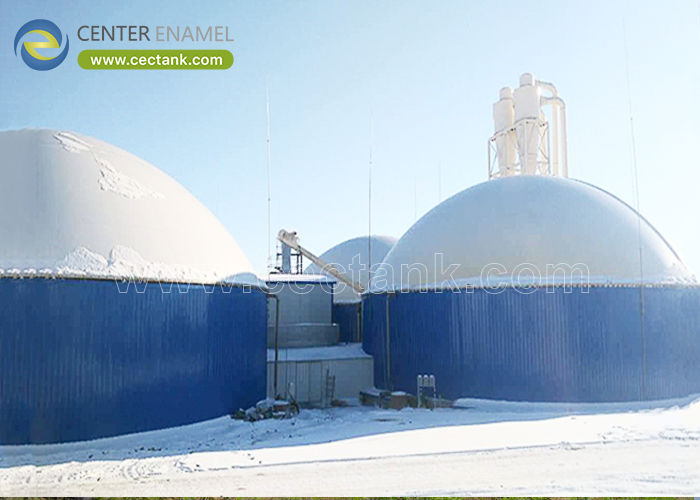
Optimisation de l'efficacité du biogaz: le rôle d'ingénierie des réservoirs préliminaires de biogaz GFS
| Lieu d'origine: | Chine |
| Nom de marque: | CEC TANKS |
| Certification: | ISO 9001:2008, AWWA D103 , OSHA , BSCI |
| Numéro de modèle: | W |
| Quantité de commande min: | 1SET |
| Prix: | $5000~$20000 one set |
| Détails d'emballage: | Poly-mousse PE entre chaque deux plaques d'acier ; palette en bois et bois |
| Délai de livraison: | 10-30 jours après le dépôt reçu |
| Conditions de paiement: | LC, T/T |
| Capacité d'approvisionnement: | 60 ensembles par mois |
|
Les informations détaillées |
|||
| Lieu d'origine | Chine | Nom de marque | CEC TANKS |
|---|---|---|---|
| Certification | ISO 9001:2008, AWWA D103 , OSHA , BSCI | Numéro de modèle | W |
| Couleur du corps du réservoir: | Vert foncé / peut être personnalisé | Intégrité de corrosion: | Excellent |
| Épaisseur de plaques en acier: | 3 mm à 12 mm, dépend de la structure du réservoir | Résistance chimique: | Excellent |
| Taille du panneau: | 2,4 m * 1,2 m | Facile à nettoyer: | Lisse, brillant, inerte, anti-adhésion |
| Mettre en évidence: | Réservoirs préliminaires de biogaz GFS,réservoirs de biogaz en acier fondu en verre,réservoirs d'ingénierie à biogas |
||
Description du produit
Optimisation de l'efficacité du biogaz: le rôle d'ingénierie des réservoirs préliminaires de biogaz GFS
L'entrée essentielle vers les énergies renouvelables
Dans le processus de digestion anaérobie (AD), leréservoir préliminaireLes déchets organiques, allant des restes alimentaires aux engrais animaux, sont homogénéisés, chauffés et préparés pour la digestion.Cette étape implique des concentrations élevées d'acides organiques volatils (AOV) et un nettoyage mécanique important..D'une valeur totale de moins de 10 ppmLes réservoirs sont la norme d'or reconnue mondialement pour cette application, offrant une+La durée de vie des réservoirs en béton et soudés à l'époxy est fréquente.
1La science de la GFS: une défense moléculaire contre l'acidification
Chez Center Enamel, nos panneaux GFS sont créés en fusionnant une frite de verre haute performance à de l'acier riche en titane à820°C à 930°CCela crée une liaison interfaciale moléculaire qui est particulièrement adaptée à la "phase acide" de la production de biogaz.
Principaux avantages techniques des réservoirs préliminaires
- Inerté chimique (pH 1 ∼ 14):Les réservoirs préliminaires subissent souvent une acidification rapide à mesure que la matière organique commence à se décomposer.
- 6Dureté de Mohs:Le prétraitement implique souvent un mélange intensif de déchets chargés de gravier.résistant à l'usure abrasive du sable et des sédiments qui dépouilleraient le revêtement d'un réservoir d'acier standard.
- 100% d' intégrité sans vacances:Chaque panneau GFS est soumis à unÉpreuve d'étincelle à haute tension de 1500 Vpour assurer une discontinuité nulle, garantissant qu'aucun liquide corrosif ne peut atteindre le substrat d'acier.
2Spécifications techniques: optimisé pour l'extraction d'AIO
| Caractéristique | Spécification des performances |
| Capacité individuelle du réservoir | Jusqu'à 60 000 m3 + |
| Vie de service | g 30 à 50 ans |
| Résistance aux acides et aux alcalis | pH 1 14(gamme standard et spécialisée) |
| Conformité à la norme | Le nombre d'heures d'attente, ISO 28765, NSF/ANSI 61 |
| Résistance à l'adhérence | 3,450 N/cm2 (liens moléculaires) |
| Compatibilité du mélange | Prend en charge les agitateurs supérieurs, latéraux et submersibles |
3. Avantages stratégiques pour les exploitants d'installations AD
Échelle record: plus de 60 000 m3
Les installations industrielles modernes de biogaz nécessitent des volumes massifs de prétraitement pour assurer un flux constant de matières premières.60,000 m3, permettant aux opérateurs de:
- Matériau de base consolidé:Mélanger et chauffer des lots massifs de déchets organiques divers dans un seul récipient.
- Améliorer la stabilité biologique:Des volumes plus importants agissent comme un tampon, empêchant les chocs de température et de pH dans les digesteurs en aval.
Installation rapide dans les zones actives
Les installations de biogaz sont des environnements riches en méthane et à haut risque.
- Zéro soudage sur site:En tant que solution de réservoir boulonné, les réservoirs GFS éliminent le besoin de permis de "travail à chaud", réduisant considérablement les risques d'incendie lors de l'expansion ou de la construction.
- Efficacité modulaire:Les panneaux préfabriqués sont expédiés dans des conteneurs standard et assemblés sur place, ce qui permet une mise en service en quelques semaines, soit 3 fois plus rapidement que le béton traditionnel.
Intégration de la rétention de chaleur et de l'isolation
Les réservoirs préliminaires nécessitent souvent un chauffage35°C à 40°CNos réservoirs GFS sont conçus pour une intégration transparente avec:
- Vêtements isolants extérieurs:Utiliser de la laine de roche ou du polyuréthane à haute densité pour minimiser les pertes de chaleur.
- Des bobines de chauffage internes:Soutenues par des panneaux muraux GFS renforcés conçus pour des charges thermiques et mécaniques élevées.
4Autorités prouvées: le benchmark de Beijing Daxing
Nos capacités en matière de transformation des déchets municipaux et industriels en énergie sont prouvées par leLe parc d'économie circulaire de la stabilité de Beijing Daxing.
- Échelle:Avec des réservoirs GFS massifs atteignant23.4 mètresen hauteur.
- Les effets:Ces réservoirs gèrent le prétraitement et le stockage très agressifs du lixivié et des déchets organiques, servant de référence mondiale pour l'intégrité structurelle des GFS sous des pressions hydrostatiques extrêmes.
5. FAQ: GFS contre béton pour les réservoirs préliminaires
Pourquoi les réservoirs préliminaires de béton échouent-ils?
La première "phase acide" de la digestion anaérobie produit des acides gras volatils qui pénètrent dans les pores du béton, affaiblissant la barre de fer.une barrière de verre non poreuse entièrement immunisée contre la pénétration acide.
Les réservoirs GFS peuvent-ils supporter les vibrations des mélangeurs lourds?
Oui, à travers les cours avancés.Analyse des éléments finis (AFE), Center Enamel conçoit l'épaisseur structurelle et les motifs de boulons pour gérer spécifiquement les charges dynamiques et les vibrations des agitateurs à couple élevé utilisés dans l'homogénéisation des boues.
Quelle est la capacité maximale d'un réservoir préliminaire?
Centre Émail peut concevoir des réservoirs à boulons GFS individuels atteignant des volumes de60,000 m3 +, fournissant la solution de stockage la plus vaste et la plus fiable du secteur du biogaz.
À propos de la technologie Shijiazhuang Zhengzhong (émail central)
Avec plus de 30 ans d'expérience et près200 brevets,Émail du centreLes réservoirs préliminaires de biogaz GFS sont opérationnels dans plus de 100 pays,aider le secteur des énergies renouvelables à obtenir des rendements de gaz plus élevés grâce à une ingénierie durable et record.
Optimisez votre stratégie de matières premières de biogaz avec une solution GFS de plus de 60 000 m3.