-
Du verre fondu dans des réservoirs en acier (596)
-
réservoirs d'acier inoxydable (434)
-
La fusion a collé les réservoirs époxydes (592)
-
Réservoirs en acier galvanisé (321)
-
Toits en aluminium de dôme (1316)
-
Réservoirs de stockage des eaux usées (231)
-
réservoirs soudés en acier (457)
-
Récipients à pression (295)
-
Digesteur anaérobie (201)
-
Réservoirs d'eau industriels (349)
-
Réservoirs en acier recouverts de verre (180)
-
Réservoirs en acier boulonnés (390)
-
Cuve de stockage de boue (115)
-
Cuve de stockage de biogaz (173)
-
réservoirs de stockage de lixiviation (133)
-
Réservoirs de stockage d'eau pour l'agriculture (179)
-
Réservoir d'eau de feu (166)
-
Silos pour le stockage des céréales (146)
-
Projets de biogaz (425)
-
Projets de traitement des eaux résiduaires (788)
-
Un toit à double membrane (223)


|
Center Enamel Fournit des Solutions Techniques de Digestion Anaérobie pour le Projet de Traitement des Eaux Usées de Transformation d'Agrumes en Indonésie
| Lieu d'origine: | Chine |
| Nom de marque: | CEC TANKS |
| Certification: | ISO 9001:2008, AWWA D103 , OSHA , BSCI |
| Numéro de modèle: | W |
| Quantité de commande min: | 1SET |
| Prix: | $5000~$20000 one set |
| Détails d'emballage: | Pol poly-FOAM entre chaque deux plaques d'acier; Palette en bois et boîte en bois |
| Délai de livraison: | 10-30 jours après le dépôt reçu |
| Conditions de paiement: | LC, T/T |
| Capacité d'approvisionnement: | 60 ensembles par mois |
|
Les informations détaillées |
|||
| Lieu d'origine | Chine | Nom de marque | CEC TANKS |
|---|---|---|---|
| Certification | ISO 9001:2008, AWWA D103 , OSHA , BSCI | Numéro de modèle | W |
| Épaisseur du revêtement: | 0,25 mm ~ 0,40 mm et double revêtement | Adhésion: | 3 450N / cm |
| Dureté: | 6.0Mohs | Durée de vie: | ≥ 30 ans |
| Test de vacances: | > 1500 V | Couleur du corps du réservoir: | Vert foncé / peut être personnalisé |
| Mettre en évidence: | traitement des eaux usées par digestion anaérobie,solutions d'eaux usées de transformation des agrumes,Projet de traitement des eaux usées en Indonésie |
||
Description du produit
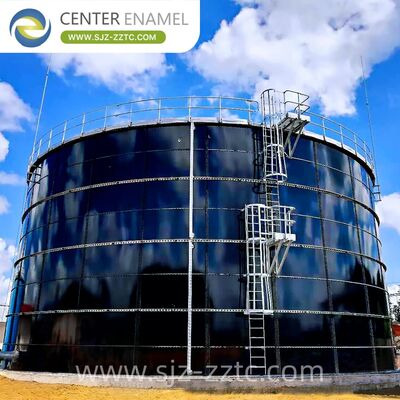
Center Enamel Fournit des Solutions Techniques de Digestion Anaérobie pour le Projet de Traitement des Eaux Usées de Transformation des Agrumes en Indonésie
L'Indonésie est l'un des plus grands producteurs d'agrumes en Asie du Sud-Est, avec une industrie robuste axée sur les oranges, les mandarines et des variétés spécialisées de citrons verts. La transformation industrielle de ces fruits — allant de l'extraction du jus à la production d'huiles essentielles — génère des volumes massifs d'eaux usées à forte concentration. Cet effluent se caractérise par des charges organiques élevées (DCO/DBO), des niveaux de pH bas et la présence d'huiles essentielles antimicrobiennes comme le d-limonène, qui peuvent inhiber les traitements biologiques standards. Pour le Projet de Traitement des Eaux Usées de Transformation des Agrumes en Indonésie, la mise en œuvre d'une technologie avancée de digestion anaérobie est une priorité essentielle pour le prétraitement des déchets organiques concentrés et la réduction de l'empreinte environnementale des clusters industriels. Les eaux usées d'agrumes nécessitent un réacteur haute performance capable de stabiliser l'acidification rapide tout en facilitant la conversion microbienne des sucres et des pectines des fruits en biogaz renouvelable. Pour les opérateurs industriels indonésiens, le récipient de digestion doit être un environnement conçu avec précision offrant une garantie sans corrosion et une stabilité structurelle à 100 %. Investir dans un système modulaire certifié en usine est un choix économique et stratégique qui assure une stabilisation des déchets à haute efficacité tout en respectant les normes de rejet nationales strictes.
Pour répondre aux exigences biochimiques et environnementales intensives du secteur des agrumes en Indonésie, les Réservoirs Revêtus d'Époxy (Réservoirs en Acier Revêtus d'Époxy) sont la technologie de choix par excellence. Ces unités en acier boulonné utilisent des revêtements d'usine avancés à haute densité, spécialement conçus pour fournir une base sûre et stable pour les réacteurs de digestion anaérobie.
Application du Produit : Récupération de Ressources Anaérobie à Haute Efficacité
Nos Réservoirs Revêtus d'Époxy sont conçus pour répondre aux exigences complexes des eaux usées de transformation des agrumes :
Réacteurs de Digestion Anaérobie : Fournissant un environnement stable et sans oxygène pour la dégradation microbienne des sucres et des pectines des fruits en biogaz riche en méthane.
Tampons d'Hydrolyse et d'Acidification : Agissant comme récipients primaires pour stabiliser les niveaux de pH et équilibrer les flux d'eaux usées à forte concentration avant qu'ils n'entrent dans le traitement biologique secondaire.
Collecte et Accumulation de Biogaz : Contenant en toute sécurité le méthane généré lors de la digestion des déchets organiques pour une récupération potentielle d'énergie thermique au sein de l'installation industrielle.
Stabilisation et Stockage des Boues : Contenant les solides chimiques et biologiques résultant du processus de traitement pour un confinement sûr et un déshydratage ou une application agricole ultérieurs.
Avantages du Produit : Résilience du Processus et Puissance Structurelle
L'avantage principal de la sélection des Réservoirs Revêtus d'Époxy pour la digestion anaérobie réside dans leur science des matériaux spécialisée et leur précision modulaire :
Protection Avancée Contre la Corrosion Interne : Les eaux usées d'agrumes sont naturellement acides, ce qui peut être très corrosif pour l'acier standard. Le revêtement époxy appliqué en usine fournit une barrière permanente et non poreuse qui garantit que le réservoir reste sans corrosion, neutralisant efficacement les attaques chimiques et protégeant l'acier structurel de la dégradation à long terme.
Technologie Supérieure de Boulonnage Étanche aux Gaz : Le maintien de conditions anaérobies efficaces est essentiel pour une dégradation organique et une capture de méthane efficaces. Nos réservoirs utilisent des joints boulonnés de haute précision combinés à des mastics spécialisés de qualité industrielle, garantissant une intégrité étanche aux gaz à 100 % pour le réacteur.
Ingénierie Modulaire à Haute Résistance : La gestion de volumes massifs d'effluents industriels implique la gestion de pressions hydrauliques importantes. Nos réservoirs utilisent des panneaux d'acier fabriqués avec précision, calculés pour gérer ces immenses contraintes physiques tout en assurant une sécurité structurelle totale dans les zones climatiques et sismiques variées de l'Indonésie.
Installation Rapide et Économique : L'expansion industrielle en Indonésie nécessite souvent une mise en œuvre efficace sur ses diverses îles. La conception boulonnée permet un assemblage rapide sur site, ce qui en fait un choix économique pour la mise à niveau de l'infrastructure de traitement des eaux usées industrielles avec un temps de construction minimal.
Intégration des Procédés CSTR, UASB, IC et USR
Pour maximiser l'efficacité du traitement anaérobie, nos réservoirs sont spécialement conçus pour accueillir des procédés biologiques avancés :
Procédé CSTR (Réacteur à Cuve Agitée Continue)
Idéal pour les eaux usées d'agrumes avec de fortes concentrations de pulpe de fruits en suspension ou de boues organiques concentrées. Nos réservoirs sont renforcés pour supporter des agitateurs mécaniques montés en partie supérieure, assurant un mélange homogène complet et une distribution de chaleur interne.
Procédé UASB (Couche de Boues Anaérobies Ascendantes)
Le procédé UASB est très efficace pour traiter la matière organique soluble des effluents d'agrumes. Nos réservoirs sont personnalisés avec des séparateurs triphasiques internes spécialisés et des collecteurs de distribution uniformes à la base. L'intérieur sans corrosion garantit la stabilité des collecteurs internes délicats.
Procédé IC (Circulation Interne)
Le procédé IC représente une technologie anaérobie à haut débit adaptée aux effluents industriels à forte charge. Nos réservoirs sont conçus pour les exigences de hauteur verticale et de pression interne du procédé IC, fournissant une base stable pour les chambres de digestion à double étape.
Procédé USR (Réacteur à Solides Ascendants)
Pour les solides organiques à haute densité courants dans les boues primaires d'agrumes, le procédé USR offre une rétention supérieure des solides. Nos réservoirs sont équipés de buses de décharge et de circulation spécialisées qui empêchent l'accumulation de solides.
Paramètres de Performance et Normes Industrielles
Nos Réservoirs Revêtus d'Époxy pour le service de réacteur anaérobie répondent aux normes techniques mondiales les plus rigoureuses :
Conformité Qualité Mondiale : Respect des normes AWWA D103 et ISO pour le confinement en acier boulonné et la sécurité structurelle.
Assurance Qualité : Chaque panneau subit des tests en usine à haute tension pour garantir l'épaisseur du revêtement et l'absence de porosité, fournissant une barrière parfaite pendant toute la durée de vie de l'actif.
Évaluation des Risques : Calculs de précision pour les charges de liquide dynamiques, la pression de gaz interne et les exigences environnementales régionales afin d'assurer la sécurité opérationnelle.
Cas de Projets : Performance Prouvée dans les Infrastructures Mondiales
La fiabilité de notre technologie est démontrée dans ces projets non fictifs :
Projet de Station d'Épuration de Sichuan Chengdu : Ce projet a utilisé 16 unités de réservoirs pour gérer des volumes massifs de matériaux, prouvant la stabilité structurelle et l'efficacité modulaire pour les infrastructures utilitaires à grande échelle.
Projet Municipal d'Assainissement et de Déchets Industriels d'Arabie Saoudite : Dans une région de chaleur extrême et de stress environnemental, 5 unités de ces réservoirs ont été installées pour fournir une solution durable et sans corrosion.
Projet d'Infrastructure Municipale d'Eau et d'Assainissement du Hebei : Ce projet a utilisé 1 unité de réservoir boulonné à haute intégrité pour soutenir un service utilitaire régional critique.
Avantages de l'Entreprise : Notre Compétence Clé
La compétitivité fondamentale de notre entreprise réside dans notre capacité à fournir des « Solutions Fiables de Procédés Anaérobies ». Nous combinons la résilience structurelle des Réservoirs Revêtus d'Époxy avec l'ingénierie avancée requise pour les procédés CSTR, UASB, IC et USR. En fournissant un ensemble complet — de la modélisation de la charge hydraulique et de l'évaluation des risques à l'installation finale — Center Enamel garantit que le Projet de Traitement des Eaux Usées de Transformation des Agrumes en Indonésie est équipé d'un système conçu pour maximiser la sécurité du processus et assurer des décennies d'exploitation fiable et sûre.